
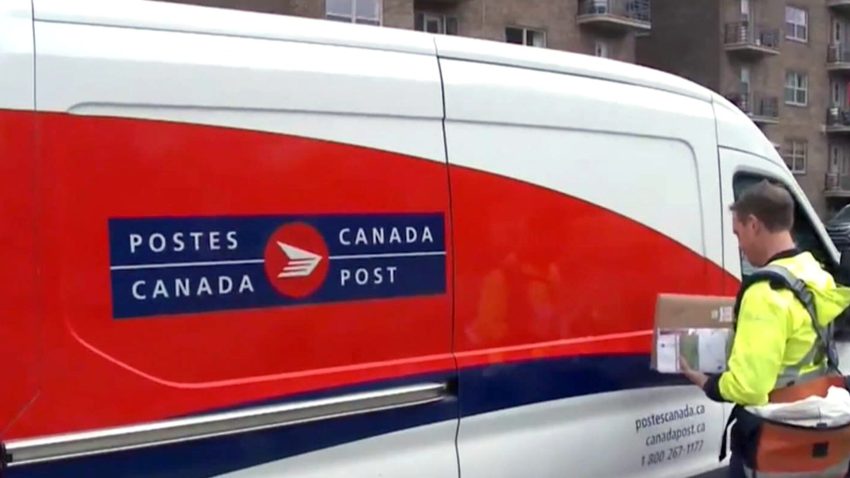
For more than a century, Canada’s postal network has been the backbone of communication, connecting communities from coast to coast. Yet today, as e‑commerce accelerates and consumer habits shift online, the industry finds itself in the middle of a transformation. Postal services, both public and private, are having to innovate faster than ever to stay relevant — adapting not just to digital tools but also to rising expectations for speed, transparency, and sustainability.
The decline of traditional letter mail
The fall in personal mail has been steady over the past decade. Canadians simply send fewer letters and pay bills online instead. For Canada Post and other carriers, that decline has forced a serious rethink: if envelopes are disappearing, where will the next frontier of growth come from?
The answer arrived in cardboard boxes. With the boom in online retail, parcels have become the new core business of postal networks. The shift hasn’t only changed operations; it’s reshaping the infrastructure of delivery itself, from last‑mile logistics to the rise of community parcel lockers.
Growth in parcel delivery and e‑commerce
In 2026, e‑commerce continues to represent the majority of volume growth for Canadian shippers. Small businesses are selling nationwide, and even small‑town consumers expect two‑day delivery on everything from pet food to electronics. In response, postal operators are expanding warehouse capacity and introducing new technology for better route optimization.
Private competitors are filling gaps too. Couriers and regional delivery services have stepped into areas where large networks once dominated, leading to a more diverse — and often more innovative — postal ecosystem. For customers, the variety means more options and better service standards overall.
Technology driving efficiency
The future of mail isn’t only about trucks and planes — it’s about data. Scanning infrastructure, predictive analytics, and digital address verification all help carriers streamline operations while providing customers with more accurate delivery updates.
Automation now plays a key role in sorting and tracking. Smart lockers are spreading across Canadian cities, giving recipients greater control over pickup times while reducing the environmental footprint of repeated delivery attempts. Even drones and electric vehicles are being trialed in some provinces, though broad rollout may still be a few years away.
Security and trust in the digital age
As technology improves convenience, it also introduces new risks — particularly with identity theft and mail fraud on the rise. Postal organizations are responding with enhanced verification systems and secure handling standards. For many consumers, especially small business owners and digital nomads, these safeguards are part of why physical mail still matters so much.
The notion of a “trusted delivery” is one of the industry’s most valuable assets. Maintaining that trust requires strict privacy controls, consistent performance, and reliable dispute resolution — pillars that are now central to most postal modernization strategies.
Sustainability and greener operations
Canada’s postal operators are also embracing environmental responsibility. Fleet electrification, route optimization to reduce fuel use, and recyclable packaging programs have become common. Some pilot projects aim to make urban delivery nearly carbon‑neutral — an initiative that appeals to eco‑conscious customers and corporate clients alike.
Sustainability is no longer a niche goal; it’s a competitive advantage. Businesses keen to advertise their green credentials increasingly partner with carriers who can demonstrate measurable emissions reductions.
Looking ahead: a hybrid postal future
In the coming years, mail in Canada will likely take a hybrid form: partly physical, partly digital, and entirely customer‑driven. Letters may never return to their old volumes, but the demand for secure, traceable, and sustainable delivery services will only keep rising.
The postal system that once carried handwritten notes now delivers data‑rich commerce — yet the underlying mission hasn’t changed: keeping people and businesses connected across one vast country. What is changing is how that connection happens, and that evolution makes the world of mail as fascinating as ever.